Archive for the ‘Science’ Category

A Simple but Challenging Game, Part I

August 9, 2007

My 15-year-old son Adam likes game theory. He invented the following simple game, and asked me about it when I got on the phone with him while I was away at a conference last month (I’ve simplified and formalized the set-up slightly):

There are two players, each of whom is given a real number which is chosen randomly from a uniform distribution between 0.0 and 1.0. The players know their own number but not their opponent’s. One player moves first and has the choice of passing or challenging. If he challenges, both players reveal their number, and the player with the higher number receives a payoff of 1, while the other player receives a payoff of 0. If the first player passes, the second player has a choice of challenging or passing. If he challenges, again both players reveal their numbers and the player with the higher number receives a payoff of 1, while the other player receives a payoff of 0. If the second player also passes, both players receive a payoff of 1/2. They play the game one time, and are interested in maximizing their expected payoff.

What is the right strategy? For example, if you received the number 0.17, would you pass or challenge if you were the first player? What about if you were the second player? What would you do if the number you received was 0.0017?

I’ll tell you more in a later post, but for now why don’t you think about it….
Mitsubishi Electric Research Labs is Hiring

August 8, 2007

Mitsubishi Electric Research Labs (MERL), the research lab where I work, is hiring. We have open research scientist positions in a number of different fields in computer science and electrical engineering.

Multicellular Logic Circuits, Part I: Evolution

August 7, 2007

If we want to construct artificial machines that rival the capabilities of biological organisms, we should try to understand the principles by which complex natural “machines” such as plants and animals are created.

It is generally agreed, at least by scientists, that all natural organisms have been “designed” by the completely blind and random process of evolution. Through evolution, a population of organisms tends to become progressively better adapted to its environment via the mutation of genomes of individuals in the population, and the selection and more rapid reproduction of the fittest organisms in that population.

51tk0pychxl_aa240_.jpg

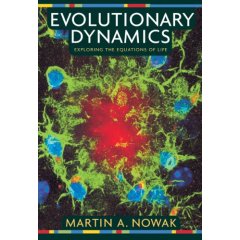
Harvard professor Martin Nowak a has written a lovely and elegant book describing the mathematics of evolutionary dynamics, using the ideas of evolutionary game theory; here is a video of Nowak describing evolutionary game theory at Harvard in 2004.

My own interest is not so much in analyzing evolution, but in exploiting it. If we understand evolution so well, shouldn’t we be able to use it to design useful machines?

180px-img013biglittledogfx_wb.jpg

Of course, humans have already for many centuries exploited evolution, using artificial selection to breed domesticated animals or cultivate useful plants.

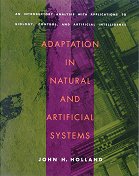
But I am looking for something else: the design of artificial machines through artificial selection. Although it has never been a mainstream idea, computer scientists have pursued such dreams since the 1950’s. When I was in graduate school in the 1980’s, I loved reading John Holland’s seminal 1975 book “Adaptation in Natural and Artificial Systems.”

adapt.jpg

Holland and his students were deeply influential in popularizing the whole field of genetic algorithms.

Another important figure in the field is John Koza, who has advocated for many years one of the most important variants of genetic algorithms, which he calls “genetic programming.” In genetic programming, computer programs, typically written in Lisp, are evolved through a process that involves mutating the programs by altering or swapping branches of the computation tree representing the program.

Genetic programming and genetic algorithms more generally, have had considerable success creating interesting and useful systems and programs. Nevertheless, I think it is fair to say that these ideas are still considered “fringe” ideas in the scientific and engineering community, and they have not widely replaced more conventional software and hardware design strategies.

So what might be missing? I will begin discussing that in Part II.


Generalized Belief Propagation

August 5, 2007

In 2002, I gave a lecture at the Mathematical Sciences Research Institute on the work I did, together with Bill Freeman and Yair Weiss on Generalized Belief Propagation, and the correspondence between free energy approximations and message passing algorithms. The lecture is available as a streaming video, together with a pdf for the slides, here.

It’s worth mentioning that there are many other interesting research lectures available in MSRI’s video archive, and that the more recent ones are of higher production quality.

Here is our most recent and comprehensive paper on this subject, published in the July 2005 issue of IEEE Transactions on Information Theory, which gives many additional details compared to the lecture: MERL TR2004-040.

If that paper is too difficult, you should probably start with this earlier paper, which was more tutorial in nature: MERL TR2001-22.

If you’re looking for generalized belief propagation software, your best bet is this package written by Yair’s student Talya Meltzer.

P.S.: I realized I haven’t told those of you who don’t know anything about it what generalized belief propagation is. Well, one answer is to that is look at the above material! But here’s a little background text that I’ve copied from my research statement to explain why you might be interested:

Most of my current research involves the application of statistical methods to “inference” problems. Some important fields which are dominated by the issue of inference are computer vision, speech recognition, natural language processing, error-control coding and digital communications. Essentially, any time you are receiving a noisy signal, and need to infer what is really out there, you are dealing with an inference problem.

A productive way to deal with an inference problem is to formalize it as a problem of computing probabilities in a “graphical model.” Graphical models, which are referred to in various guises as “Markov random fields,” “Bayesian networks,” or “factor graphs,” provide a statistical framework to encapsulate our knowledge of a system and to infer from incomplete information.

Physicists who use the techniques of statistical mechanics to study the behavior of disordered magnetic spin systems are actually studying a mathematically equivalent problem to the inference problem studied by computer scientists or electrical engineers, but with different terminology, goals, and perspectives. My own research has focused on the surprising relationships between methods that are used in these communities, and on powerful new techniques and algorithms, such as Generalized Belief Propagation, that can be understood using those relationships.

I’ll tell you more in future posts; I promise.

“Ageless Quest” by Lenny Guarente

August 5, 2007


519qsvhv4wl_sl210_.jpg

MIT professor Lenny Guarente is a pioneer and leader in the study of the molecular biology of aging. This book is a popularized account of some of the early research that he and his students and post-docs conducted; research that helped move the study of aging from being a kind of slightly disreputable scientific backwater to one of the most dynamic and exciting fields of modern molecular biology. Guarente’s research focused on sirtuins, which are proteins that are now understood to retard aging in a wide variety of organisms, with mechanisms that vary depending on the organism.”

Ageless Quest” is an easy read and a great introduction to the field. It had a surprising amount of impact on me; after reading this book I decided that I wanted to learn more about what was happening in this very important field, so I audited an MIT reading course on the molecular biology of aging taught by Angeiszka Czopik and Danica Chen, two post-docs in Prof. Guarente’s lab, and then I attended the 2006 Summer School Course on the molecular biology of aging at Woods Hole’s famous Marine Biological Laboratory, organized by Gary Ruvkun and Steve Austad.

This book probably won’t have that big an impact on you! It’s a pretty light book weighing in at only 154 pages; but you can learn a lot whether or not you have a background in biology.

SimPy and Discrete-Event Simulation

August 3, 2007

I’ve been using the SimPy discrete-event simulation package lately, and I really like it.

As the SimPy home page says, “SimPy (= Simulation in Python) is an object-oriented, process-based discrete-event simulation language based on standard Python.” What does that mean? Well, first of all, it is a Python module, and you import and then use it like any other Python module.

(If you haven’t used Python, get yourself over to www.python.org and download it now! Or if you use Mac OS X or Linux, you already have it. Python is a powerful, high-level general-purpose language, and comes with excellent documentation.)

“Discrete-event simulations” are something a good nerd will often need to write. They are simulations where things happen at discrete times. There are three levels of sophistication in handling such simulations. Level zero is to just step forward in time by small increments, checking every time step for each possible event. Not too bright, because you waste a lot of computation on time steps when nothing happens. Level one is the “event-oriented” approach, where you keep events in some “agenda,” and you process events in the agenda one at a time, with each event in the agenda possibly creating new events in the future that are then added to the agenda.

Level one is as far as most people get, but it’s not where you should stop, because writing an event-oriented simulation is painful and error-prone. The right thing to do is to go to the next level of sophistication, the “process-oriented” approach.

In the process-oriented approach, you create special objects, called processes, which are like “living” objects. Processes have a special event method which functions as an event loop. To program the events in your simulation, you need to write one or more process event methods which describes how each process object reacts to the possible events in the simulation. It turns out that these process event methods are very natural and easy to write, because they properly correspond to how we think about what is happening in the simulation.

So how does it work? Well, SimPy sets up and handles the event agenda underlying the system, so you don’t have to do it yourself. When you call the SimPy “simulate()” method, it begins stepping through the events in the event agenda, calling the appropriate process event methods defined in your processes in the correct order. The Python feature that makes the whole thing work is the Python “yield” statement, which is like a return, except that the next time a function with a “yield” is called, it picks up after the yield rather than at the beginning of the function. All the process event methods you define when using SimPy will use yields to give back control to the SimPy run-time system.

Anyways, Professor Norm Matloff from UC Davis has written some excellent tutorials, or you can use the documentation that comes with SimPy.

Zillions of Games

August 2, 2007

Visit Zillions of Games

If you like abstract games, especially chess variants, you should enjoy Zillions of Games. It’s quite an amazing piece of software; a piece of AI technology that I actually would have not thought possible.

Games are defined using a rules file (written in a Lisp-like language), and then a generalized alpha-beta search engine is unleashed. Basically, it works best for Chess and its many variants, but it plays a really surprising number of games very well. It comes with over 350 games and puzzles, and you can download thousands more.

It’s not that hard to modify existing rules files to define new games; my son was interested in having an opponent for a game he invented and we were able to modify an existing rules file to play his game in less than an hour–and it played very well.

Naturally, it doesn’t play all games as well as humans, but it plays so many games so well (with adjustable levels to make a fair fight if it’s too good) that one can’t complain. Unfortunately, it’s only available for Windows computers.

Multicellular Logic Circuits

August 2, 2007

I have recently begun working on biologically-inspired computing, and in particular am pursuing a new approach that I call “multi-cellular logic circuits.” These circuits are constructed from many identically-specified cells and undergo a developmental phase much like multi-cellular organisms. I plan to describe these ideas in much more detail here at Nerd Wisdom. Until I create those pages, you can visit this page to find a PDF and a PowerPoint version of a talk I gave on the subject at a conference in Santa Fe in May 2007.

EDIT: I have begun creating those pages. You can start here.


The Elements of Computing Systems: Building a Modern Computer From First Principles

August 1, 2007

51jfxm2x1yl_aa240_.jpg

I already wrote a review of this wonderful book, written by Noam Nisan and Shimon Schocken, at Amazon.com, so I’ll just repeat it here:

I highly recommend this book if you are interested in learning about computer science. The book is organized around the idea of building a computer from the fundamental logic gates up–starting with the hardware (combinational logic gates, arithmetic logic units, sequential logic gates, the CPU and memory) and then through the software hierarchy (starting with the machine language, and working up through the assembler, a virtual machine, a compiler for a high-level language, and an operating system). As a “by-product,” one learns, by very relevant examples, many fundamental concepts of computer science.

You can just read the book, but the best idea is to follow the authors’ advice and do the projects where you implement every necessary piece of the computer system yourself. The projects are all very well organized. All the software modules necessary to emulate any part of the computer, plus half the chapters from the book, are available for free download from the authors’ web-site. It all works beautifully. If you want to skip any of the projects, you can, because the software is organized in such a way that it will use built-in modules instead of the ones you built if necessary.

The authors seem to have extensively tested the whole approach through the courses they have taught using this material. I also noticed that Harvard’s Computer Science 101 course is being taught based on this book. I have been using the book for self-study with absolutely no problems–in fact I have never had such a great experience with a self-study course. All you need is a Windows, Linux, or Mac OS X computer and access to the internet, and you can give yourself a wonderful education in computer science.

In terms of prerequisites, you only really need to have some experience with programming (e.g. with C, or ideally with Java or Python). I think that the book should work well for students or hobbyists who don’t have any more experience than that, but it is also great for much more experienced students, as a kind of integrative summary of the field. I also think the book is perfect for graduate students or researchers from other fields who want to learn how digital hardware and software systems are actually engineered.

Finally, I just want to compliment the authors on the extraordinary care that they have taken with the whole project. The computer design that you build up is wonderfully elegant–at every stage the design is just as simple as it can be while being sufficient. Every piece of emulation software works as advertised. Even the extra powerpoint or .pdf tutorials are nicely done. This is really quality work, and using it is just a real pleasure. Finally, the source code for all the software provided by the authors is available, so if you wanted to extend the provided emulators, you could do that.

In summary, I give this book my unqualified highest recommendation.

David MacKay’s “Information Theory, Inference, and Learning Algorithms”

August 1, 2007

sept2003cover25.gif

This is an easy book for me to recommend. David J.C. MacKay is a professor in the physics department of Cambridge University, and he is a polymath who has made important contributions in a wide variety of fields. This textbook is an excellent introduction to modern error-correcting codes, compression, statistical physics, and neural networks. It is tied together by a recurring appeal to the power of Bayesian methods.

David wrote this book over the course of many years, publishing his drafts on the web. You can still view the entire book on the web here. But the book is very inexpensive; unless you’re very poor, you’ll really want to buy a copy.

As Bob McEliece (a professor at Caltech and Shannon medalist) wrote, “you’ll want two copies of this astonishing book, one for the office and one for the fireside at home.” I know this is true because I actually have two copies; I bought my own copy as soon as the book was published, and then found that David had kindly sent me a copy.